SoCal communities mark one year since sweeping ICE raids
News Briefing
AI SummaryKey Point
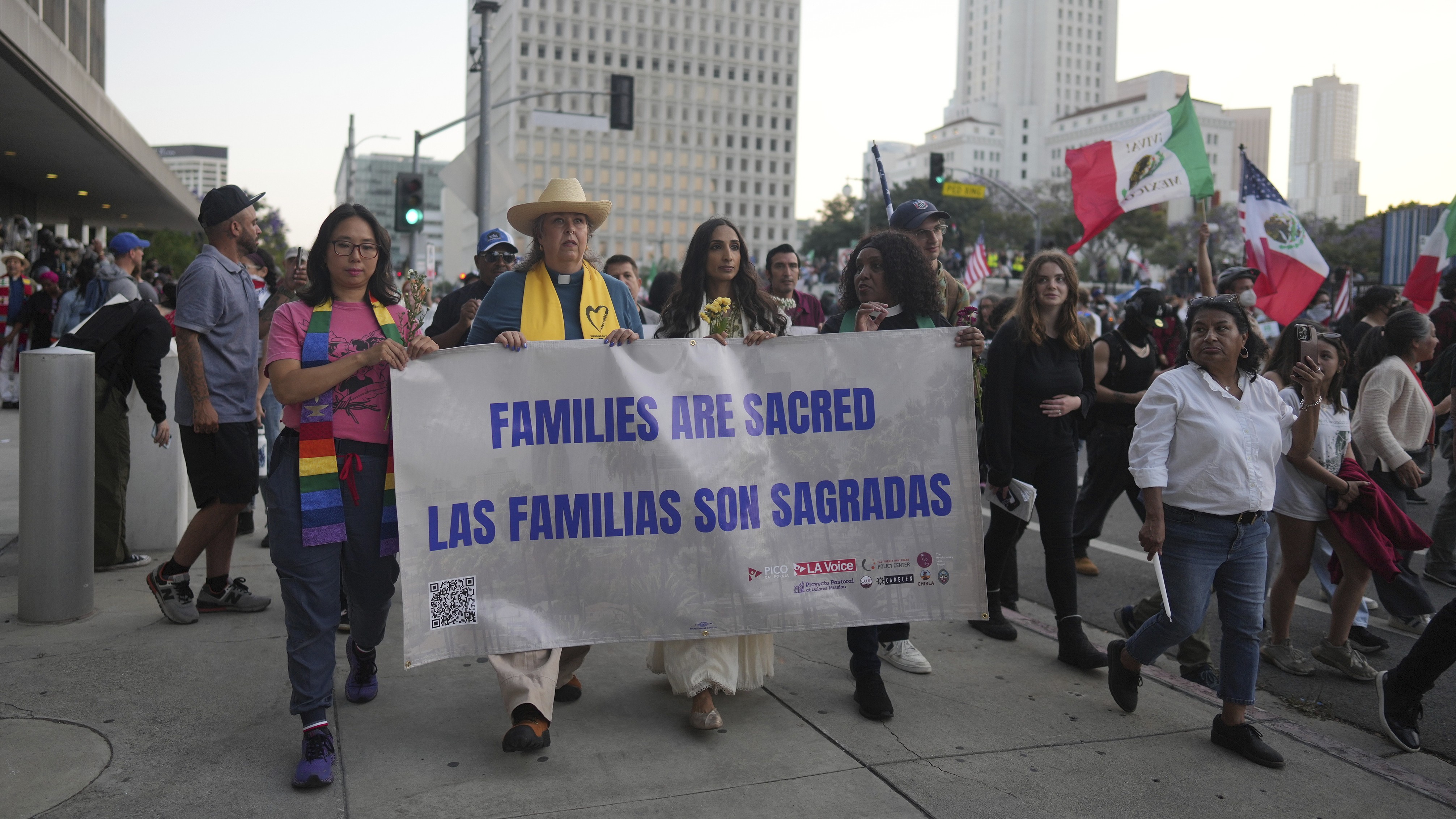
Immigrant rights advocates, families and elected officials gather Saturday in Los Angeles to mark the first anniversary of sweeping federal immigration raids across Southern California that detained dozens of workers and galvanized a regional organizing movement.
What Happened
The raids — carried out five months into the second Trump administration — drew sharp backlash across Southern California, spurring legal challenges and a volunteer patrol network that now counts thousands of participants across the region.
Immigrant rights advocates, families and elected officials gather Saturday in Los Angeles to mark the first anniversary of sweeping federal immigration raids across Southern California that detained dozens of workers and galvanized a regional organizing movement.
The raids — carried out five months into the second Trump administration — drew sharp backlash across Southern California, spurring legal challenges and a volunteer patrol network that now counts thousands of participants across the region.
Saturday's events include a 9:30 a.m. rally outside the Ambiance Apparel storefront in downtown Los Angeles, where dozens of employees were arrested during the initial enforcement action, according to ABC7 Los Angeles. Mayor Karen Bass is scheduled to join immigrant community leaders at a separate 10:30 a.m. gathering.
Ron Gochez, a history teacher and member of the community organization Union del Barrio, said organizing efforts have not let up since the raids. "We've been training people this whole time. We haven't taken a step back, we haven't slowed down," Gochez said.
Volunteer patrols have operated for more than a year in early morning hours across Southern California, monitoring for signs of federal enforcement operations. Union del Barrio and the Self Defense Coalition were among the organizations that mobilized in response to the raids, ABC7 reported.
Gochez acknowledged the stark gap between community volunteers and armed federal officers. "We use is people power. They're fully armed with military assault rifles. We're not armed with anything other than our cell phones, megaphones, and that's about it," he said.
The enforcement actions also prompted legal challenges. Advocates say the volunteer monitoring and legal support networks built over the past year have grown substantially in reach and numbers across the region.
One year after federal agents moved through Southern California workplaces, community organizations say the monitoring networks and mutual aid structures built in response have outlasted the immediate crisis and are set to continue.
This article was written by OC LifeHub staff with AI assistance, based on reporting by ABC7 Los Angeles, and fact-checked against the source.
Article Facts
ABC7 Los Angeles
abc7
Community
Jun 6, 2026
5 months ago
Neutral
Open the original article for full context
Go to ABC7 Los Angeles to read the complete story, quotes, and full reporting context.