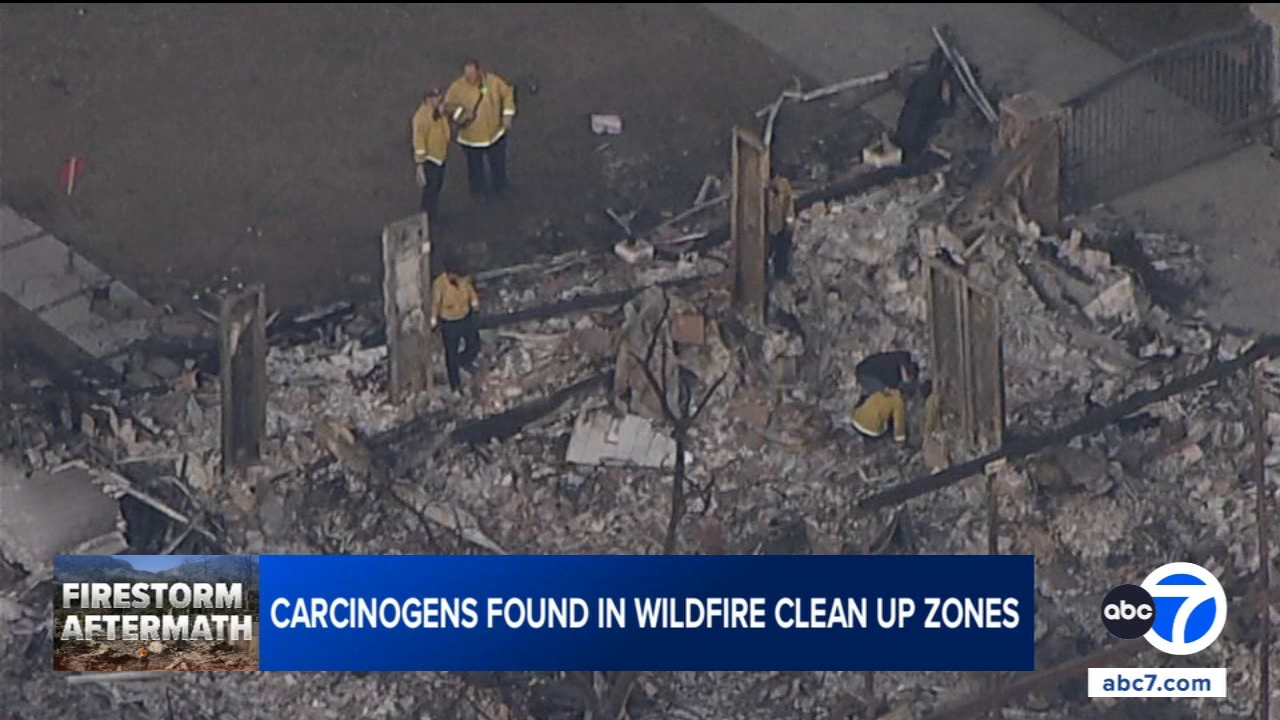
Chromium-6 from LA fire cleanup zones put 3.3 million at risk, study finds
News Briefing
AI SummaryKey Point
Carcinogenic hexavalent chromium-6 nanoparticles spread as far as nine miles from the Palisades and Eaton wildfire cleanup zones, potentially exposing 3.3 million people to concentrations hundreds of times above normal Los Angeles air levels, UCLA and UC Davis researchers reported Monday.
What Happened
The findings, published in Nature Communications Earth & Environment, raise urgent questions about debris handling in wildland-urban interface fires — a hazard with direct implications for fire-prone Southern California communities stretching from Los Angeles to Orange County.
Carcinogenic hexavalent chromium-6 nanoparticles spread as far as nine miles from the Palisades and Eaton wildfire cleanup zones, potentially exposing 3.3 million people to concentrations hundreds of times above normal Los Angeles air levels, UCLA and UC Davis researchers reported Monday.
The findings, published in Nature Communications Earth & Environment, raise urgent questions about debris handling in wildland-urban interface fires — a hazard with direct implications for fire-prone Southern California communities stretching from Los Angeles to Orange County.
Researchers detected the elevated chromium-6 concentrations approximately two months after the fires were extinguished, with particles drifting downwind up to nine miles from the cleanup zones, according to ABC7 Los Angeles. The average measured concentration was 13.7 nanograms per cubic meter — a level that exceeded EPA screening thresholds for indoor air quality.
"It can cause lung cancer, some throat and nasal cancers if the exposure is over a long period of time," said Dr. Michael Jerrett, a professor in UCLA's Department of Environmental Health Sciences. "On a more acute basis, you can see respiratory irritations, skin irritations, eye irritations."
The dispersal zone covered densely populated neighborhoods including Beverly Hills, West Hollywood and the San Fernando Valley. Researchers estimated that up to 3.3 million residents were exposed to chromium-6 at concentrations far above typical Los Angeles background levels. Chromium-6 occurs naturally in soil, volcanic dust and gases, but the National Institute of Environmental Health Services has identified it as a compound generally produced by industrial processes.
Concentrations eventually returned to background levels roughly eight months after the fires as particles converted to the less toxic chromium-3 form, the study found.
Michael Keeman, a professor in UC Davis' Civil and Environmental Engineering Department, told ABC7 the study points toward a broader policy question. "So if there is another fire that burns into an urban area, how should you treat that debris? And that's more, I think, the public health message from our study," Keeman said.
The study was co-authored by Dr. Yifang Zhu, also of UCLA's Department of Environmental Health Sciences, and was published June 2 in the journal Nature Communications Earth & Environment.
This article was written by OC LifeHub staff with AI assistance, based on reporting by ABC7 Los Angeles, and fact-checked against the source.
Article Facts
ABC7 Los Angeles
abc7
Health
Jun 2, 2026
5 months ago
Neutral
Open the original article for full context
Go to ABC7 Los Angeles to read the complete story, quotes, and full reporting context.