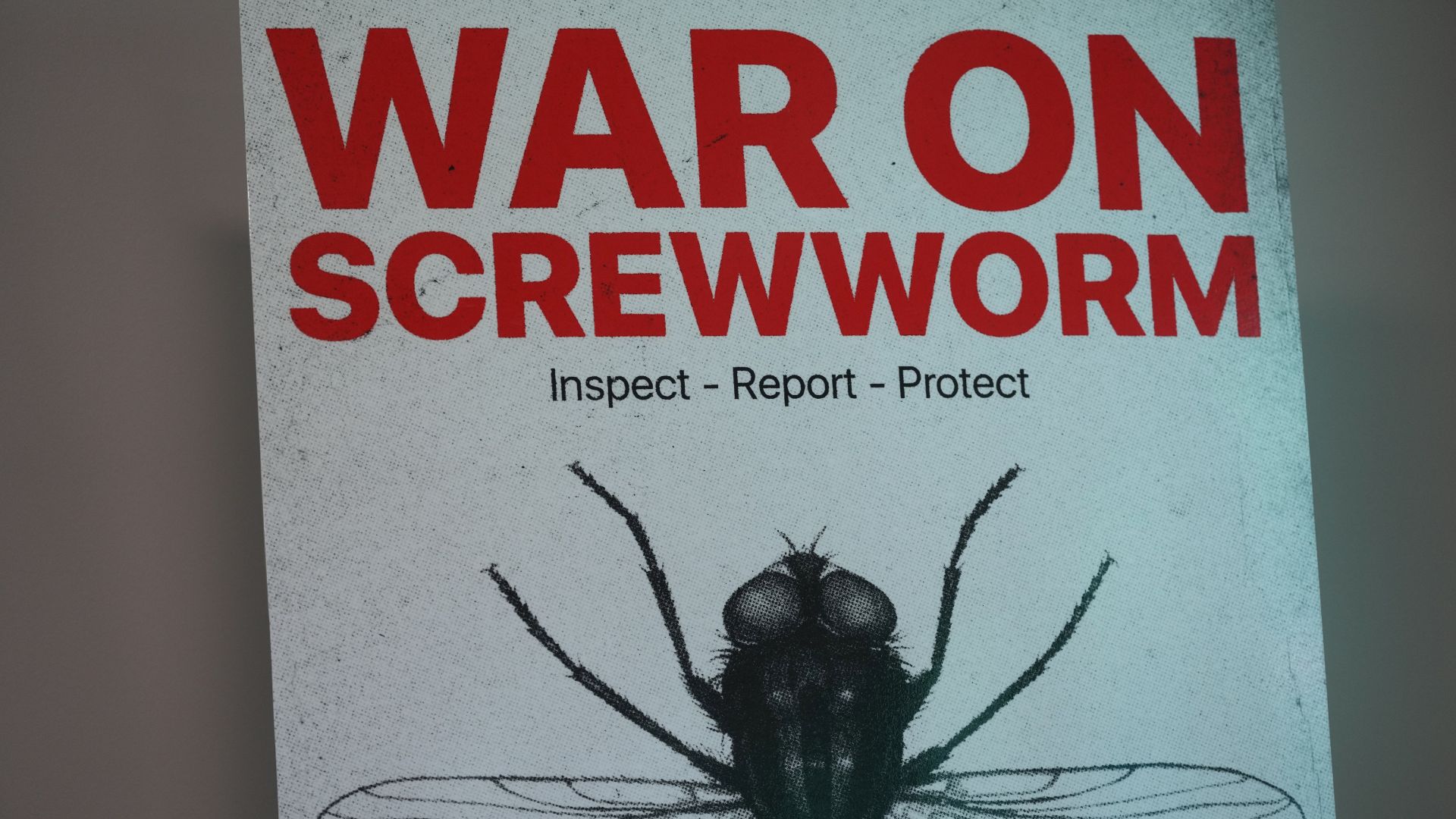
Screwworm parasite spreads to New Mexico, threatening US cattle industry
News Briefing
AI SummaryKey Point
Federal officials confirmed Monday that the New World screwworm — a flesh-eating parasitic fly — has spread beyond Texas and into New Mexico for the first time, with five total cases detected across two states as the USDA races to contain the outbreak.
What Happened
The parasite, which can kill livestock within weeks if untreated, has prompted Canada to halt cattle imports from Texas and spurred the federal government to fast-track a $750 million sterile fly factory — a sign of how seriously officials view the threat to the nation's agricultural industry.
Federal officials confirmed Monday that the New World screwworm — a flesh-eating parasitic fly — has spread beyond Texas and into New Mexico for the first time, with five total cases detected across two states as the USDA races to contain the outbreak.
The parasite, which can kill livestock within weeks if untreated, has prompted Canada to halt cattle imports from Texas and spurred the federal government to fast-track a $750 million sterile fly factory — a sign of how seriously officials view the threat to the nation's agricultural industry.
Five cases have been confirmed across two states — three calves and one goat in Texas's La Salle and Gillespie counties, and one dog in Lea County, New Mexico — according to the USDA. The New Mexico dog had no travel history to Texas or Mexico, officials said, raising concern the parasite may already be spreading independently of the main Texas cluster.
The New World screwworm is a parasitic fly that deposits eggs in open wounds of warm-blooded animals. Once hatched, larvae burrow into living tissue and can kill cattle, wildlife, pets and, on rare occasions, humans within weeks. The fly thrives in humid conditions at temperatures of at least 77°F, making summer months a prime season for spread.
Edward Burgess, a University of Florida entomologist, told ABC7 Los Angeles that the confirmed case count was likely to climb. "When that first case is seen, everyone is being vigilant and their eyes are on it more intensely," Burgess said. "And when you are looking for something, you are more likely to see it."
The USDA has been dropping sterile male flies by plane over south Texas since February 2026, reviving a decades-old technique that once contained the pest at the Panama-Colombia border. Officials have established 12-mile quarantine zones around each confirmed case and are supplying government-approved medications to livestock owners, according to ABC7 Los Angeles. The agency is also planning a $750 million fly production facility in Texas, with the goal of generating enough sterile flies to halt any outbreak by 2027.
Texas Gov. Greg Abbott urged ranchers to check their herds closely, calling the infection "a highly treatable condition if you act on it immediately." Texas Agriculture Commissioner Sid Miller was less sanguine about the federal approach. "What the hell is a good fly?" Miller said, openly mocking the strategy of releasing insects to fight insects.
Canada has temporarily halted imports of cattle, horses and livestock from Texas amid the scare. Millions of wild white-tailed deer in Texas are also at risk, authorities said. The screwworm was first detected in Mexico in late 2024; the United States had not faced a sustained outbreak since eradicating the pest domestically decades ago.
This article was written by OC LifeHub staff with AI assistance, based on reporting by ABC7 Los Angeles, and fact-checked against the source.
Article Facts
ABC7 Los Angeles
abc7
Health
Jun 9, 2026
5 months ago
Neutral
Open the original article for full context
Go to ABC7 Los Angeles to read the complete story, quotes, and full reporting context.