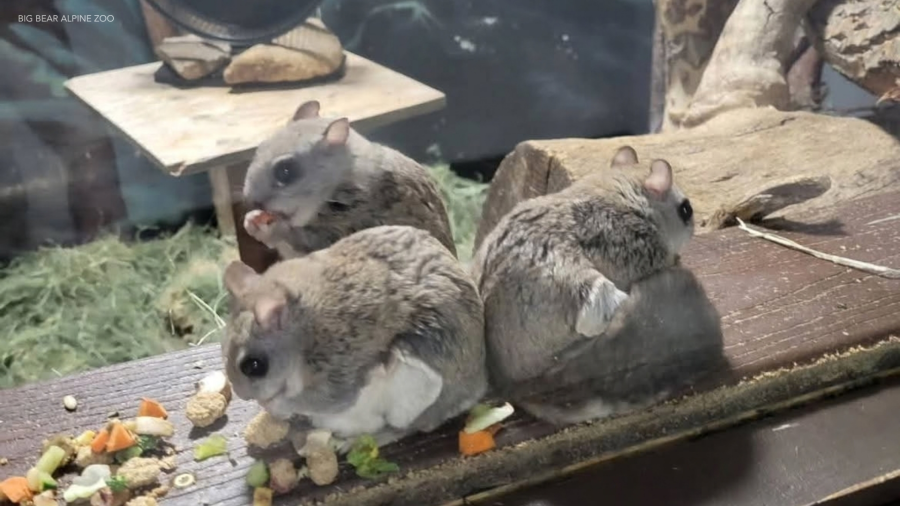
Three flying squirrels die at Big Bear Alpine Zoo
News Briefing
AI SummaryKey Point
Three elderly flying squirrels at Big Bear Alpine Zoo have died after age-related health problems, including eye ailments and weight loss, KTLA reported.
What Happened
The zoo said Lichen, Truffles and Juniper were over 10 years old, far beyond the typical three-to-five-year lifespan for flying squirrels in the wild, according to KTLA.
Three elderly flying squirrels at Big Bear Alpine Zoo have died after age-related health problems, including eye ailments and weight loss, KTLA reported.
The zoo said Lichen, Truffles and Juniper were over 10 years old, far beyond the typical three-to-five-year lifespan for flying squirrels in the wild, according to KTLA.
Big Bear Alpine Zoo announced Sunday that the flying squirrels Lichen, Truffles and Juniper had died, according to KTLA.
Lichen was treated for an eye ailment before veterinarians found an untreatable tumor behind her eye, KTLA reported. Veterinarians said removing the eye would not have helped, and Lichen was euthanized after her quality of life declined.
Truffles, Lichen's sister, later developed the same eye problem and also was euthanized after her quality of life diminished, according to KTLA. Juniper had been steadily losing weight and died before veterinarians planned to euthanize Truffles.
Zoo officials said the three squirrels were the oldest flying squirrels their veterinarians had treated. "These 3 were so great to work with and for. Very interactive – especially at feeding time – and just a lot of fun to observe," zoo officials said in a social media post, according to KTLA.
Truffles and Lichen were brought to the zoo from Lake Arrowhead in 2015 after they were found nesting in an electrical box, KTLA reported. Juniper came from Forrest Falls after her tree was cut down, and all three were hand raised as babies before living together at the zoo's old and new locations.
Big Bear Alpine Zoo specializes in rehabilitating and releasing local Alpine species and also maintains a permanent animal collection representing over 85 species of mammals, birds and reptiles, according to KTLA.
This article was written by OC LifeHub staff with AI assistance, based on reporting by KTLA, and fact-checked against the source.
Article Facts
KTLA
ktla
Local
Oct 5, 2026
about 13 hours ago
Neutral
Open the original article for full context
Go to KTLA to read the complete story, quotes, and full reporting context.