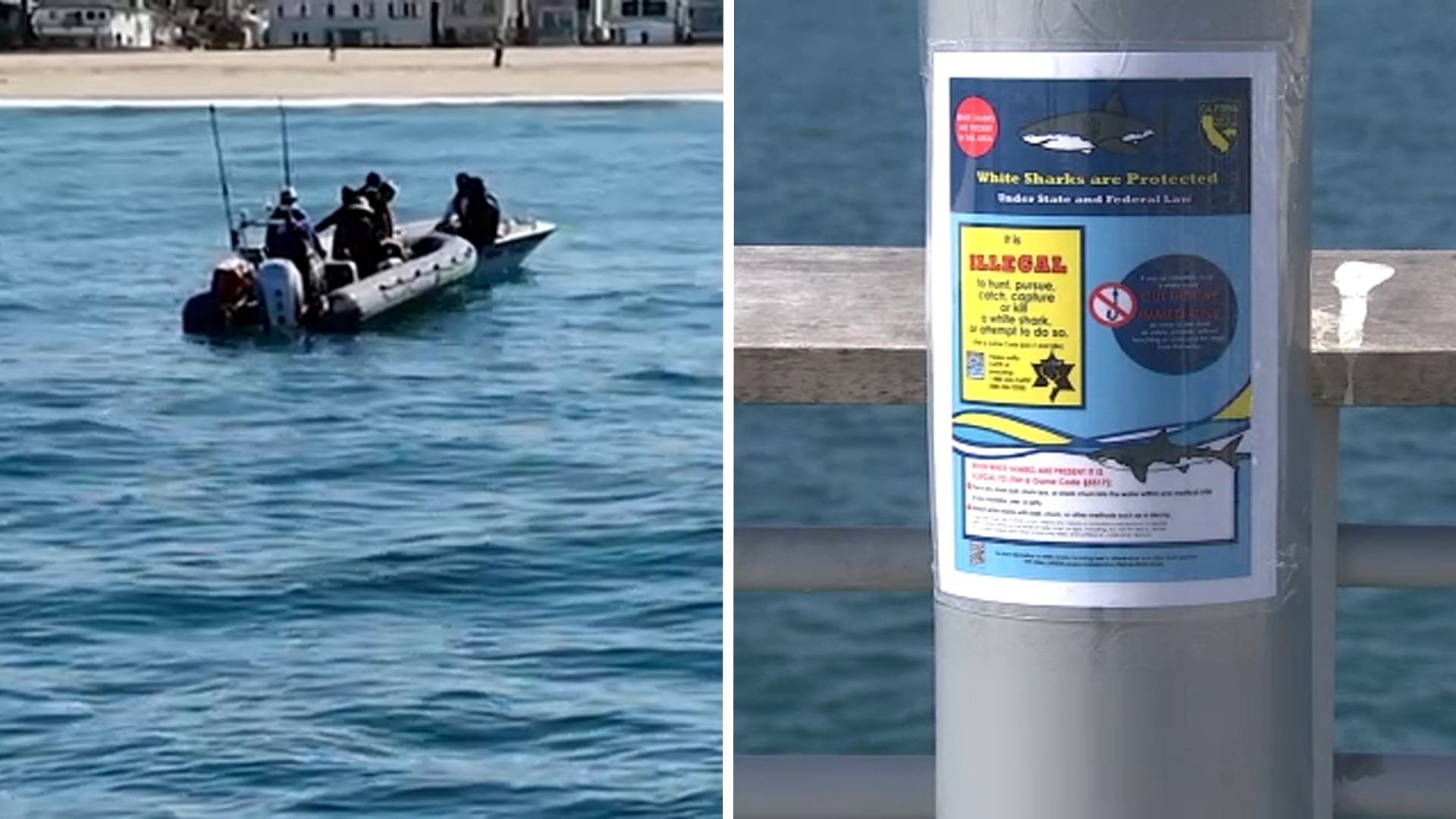
Illegal shark fishing at SoCal piers puts swimmers at risk, experts warn
News Briefing
AI SummaryKey Point
Anglers illegally targeting juvenile great white sharks at Southern California piers are creating life-threatening risks for swimmers and surfers, with marine scientists warning that a hooked shark dragging fishing line through crowded waters could act as a "cheese cutter," according to ABC7 Los Angeles.
What Happened
The trend alarms coastal safety officials and marine biologists ahead of what could be an unusually active shark season — warming El Niño waters may double the number of great whites off Southern California this year, a pattern that extends to Orange County beaches sharing the same marine ecosystem.
Anglers illegally targeting juvenile great white sharks at Southern California piers are creating life-threatening risks for swimmers and surfers, with marine scientists warning that a hooked shark dragging fishing line through crowded waters could act as a "cheese cutter," according to ABC7 Los Angeles.
The trend alarms coastal safety officials and marine biologists ahead of what could be an unusually active shark season — warming El Niño waters may double the number of great whites off Southern California this year, a pattern that extends to Orange County beaches sharing the same marine ecosystem.
Juvenile great white sharks were hooked nearly two dozen times recently at Hermosa Beach Pier, according to the ABC7 report. Chris Lowe, director of the Shark Lab at Cal State Long Beach, said the surge in illegal fishing attempts is creating dual hazards for anyone in the water.
"The biggest worry is they hook into a big shark. That's going to drag out a lot of line. There are people swimming and surfing in that area, and that's a cheese cutter. It could decapitate somebody. In addition, you got an angry shark at the end of the line, and that puts somebody at risk who's swimming," Lowe said.
Fishing for great white sharks is federally illegal, and a state law passed last year further prohibits baiting near the animals or casting lines in their vicinity. Violations can bring fines of up to $1,000 and up to six months in jail. "It's illegal to target white sharks, and there was a new law that was passed last year that means you can't bait near them, you can't put targets out near them to lure them, and you certainly can't fish near them," Lowe said.
The danger is not theoretical. In 2014, a great white entangled in a pier fisherman's line bit a long-distance swimmer off Manhattan Beach Pier. Patrick Butler, chief and harbor master with Redondo Beach Fire Department, said authorities have posted warnings along Hermosa Beach Pier and are actively monitoring the area. "It's a little bit concerning that folks feel so comfortable going out there and essentially trying to catch a great white, a predator shark," Butler said.
Local angler Cheyne Sullivan, of Redondo Beach, said he has never hooked a great white and wants others to stop trying. "I've never caught a great white out here, but to anyone who's fishing for great whites, it's not allowed, and it's a hassle, too," Sullivan said, according to ABC7.
Scientists link the growing shark presence to warming sea temperatures and viral social media videos showing hook-removal from great whites, which appear to be inspiring more anglers to seek the same encounter.
With El Niño-driven warming potentially doubling the great white shark population off Southern California this year, Lowe said the risks will grow as summer beach season approaches — a warning that applies equally to Orange County's coastline, which shares the same migratory waters.
This article was written by OC LifeHub staff with AI assistance, based on reporting by ABC7 Los Angeles, and fact-checked against the source.
Article Facts
ABC7 Los Angeles
abc7
Local
Apr 27, 2026
6 months ago
Neutral
Open the original article for full context
Go to ABC7 Los Angeles to read the complete story, quotes, and full reporting context.